
Running a Sex Offender Check in Fulton County
The official Arkansas registry is managed by the Arkansas Crime Information Center within the Arkansas Department of Public Safety. For Fulton County, the public check is not a county-run list found on the sheriff page. It is a statewide registry search that can be filtered to local addresses, city names, county, ZIP code, or map area.
People moving to or returning to Arkansas must register with the local law enforcement agency that has jurisdiction within three business days of establishing residency. For addresses outside city police jurisdiction in Fulton County, the local agency is likely the sheriff. For city addresses, local law enforcement may be a city police department or sheriff route depending on jurisdiction.
Fulton County Registry Checks Start With ACIC
The Arkansas Sex Offender Registry public search is the main registry interface for Fulton County lookups.
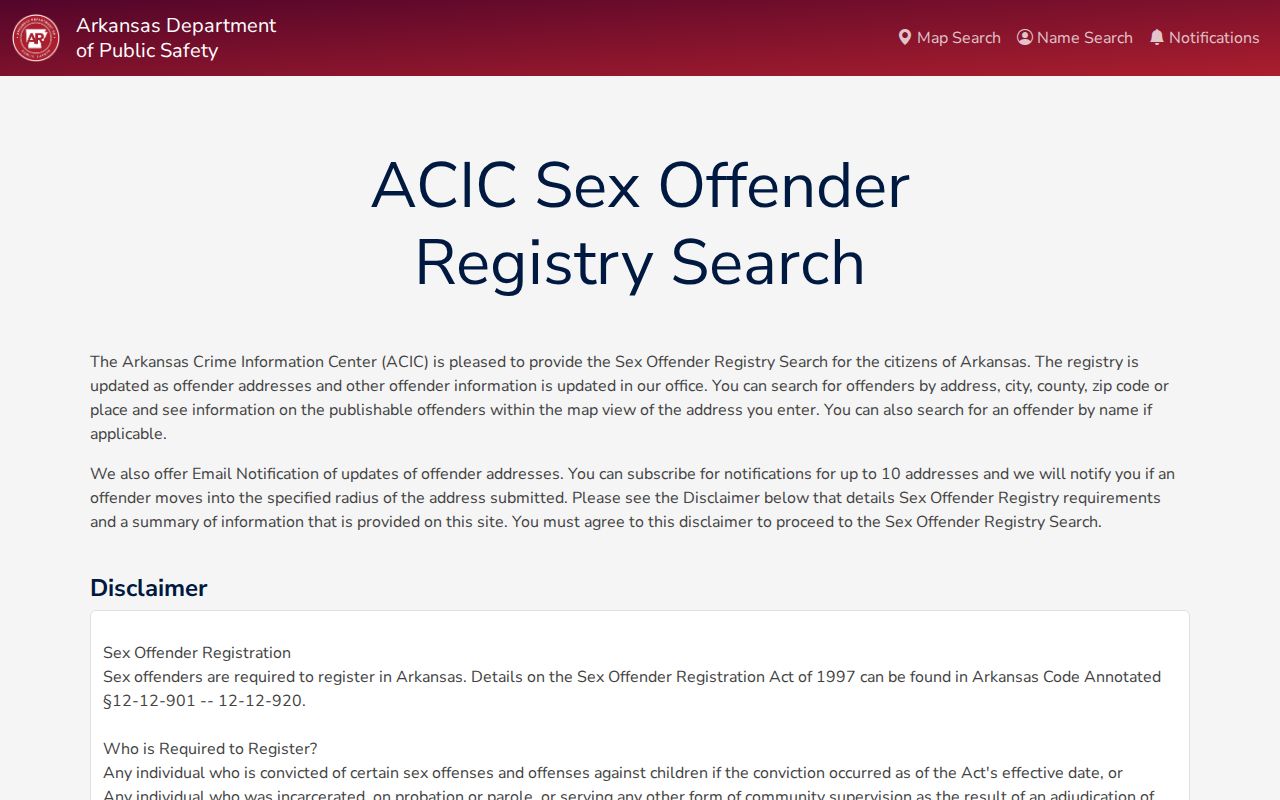
Filtering by county or local address is usually better than relying on a broad name search when the goal is neighborhood awareness.
ACIC's sex offender information page explains the Arkansas registration act, risk levels, and public web disclosure rules. It lists the Sex Offender Registration Act of 1997, Ark. Code Ann. 12-12-901 through 12-12-920, as the governing registration framework.
Searching the Arkansas Sex Offender Registry
The Arkansas Sex Offender Registry can be used as a location search or a name search. A county search is useful for all publishable Fulton County records, while a city, ZIP, or address search is better for a focused area. A name search helps when the person is already known and the spelling is reliable.
- Open the Arkansas Sex Offender Registry public search and review the use conditions.
- Search by address, city, county, ZIP code, place, map view, or name.
- Use Fulton County or a local city to narrow the result list.
- Open the public profile and read the risk level, address display, offense information, and status fields.
| Field Label | Type | Required | Notes |
|---|---|---|---|
| Address | Text or map | No | Used to see publishable offenders within a mapped area. |
| City | Text or dropdown | No | Use Salem, Mammoth Spring, Cherokee Village, or another local city when known. |
| County | Dropdown or text | No | Use Fulton to review county-filtered registry records. |
| ZIP code | Text | No | Useful for smaller local searches when an address is not needed. |
| Place | Text or map | No | Arkansas.gov describes place searching in the service summary. |
| Name | Text | No | Best when the spelling and identity are already known. |
| Map view | Map | N/A | Shows publishable offenders within searched geography. |
Map Search vs Name Search
A map or address search answers a local safety question: which publishable registry profiles appear near a Fulton County location. A name search answers an identity question: whether a specific person appears in the Arkansas registry. Both depend on the same state registry, but they solve different problems.
| Search Type | Best Use | Local Limit |
|---|---|---|
| County | Broad Fulton County review | Can return records too far from the address of concern. |
| Address or map | Neighborhood awareness | Only publishable registry data appears. |
| Name | Known-person lookup | Spelling, aliases, and identity matching matter. |
| NSOPW | Cross-state search | Arkansas ACIC still controls Arkansas record content. |
What a Registry Profile Shows
Public registry profiles are built for community notification. ACIC public disclosure rules identify the types of information that may appear for public levels. A registry profile is not a criminal court file. It does not replace Search ARCourts, a court judgment, or a complete criminal history check through Arkansas State Police.
| Name and Aliases | Complete name and aliases for publicly disclosed levels when ACIC publishes them. |
|---|---|
| Date of Birth | Birth information may be part of public disclosure for registry identification. |
| Photo and Description | Photo and physical description may appear where the public profile displays them. |
| Address or Map Location | Geographic display helps locate publishable registered addresses or mapped areas. |
| Offense and Risk Level | Shows offense information, registration level, and public risk category where published. |
| Status Fields | May include compliance, assessment, or registration-status information when available. |
Lower-Level Data May Differ
ACIC's level descriptions matter because public visibility is not the same for every registrant. Level 3 and Level 4 information must be available on the Arkansas state website. Lower-risk records may not be displayed the same way. Recent changes also added public access for certain Level 2 offenders who were 18 or older and whose victim was 14 or younger at the time of the offense.
ACIC also states that offenders who fail to submit to assessment are assigned default Risk Level 3. That default can affect public display, so a level is not just a label. It reflects Arkansas risk assessment and disclosure rules.
Registration Requirements and Levels in Arkansas
Arkansas uses risk levels for public disclosure and community notification. The research did not locate a Fulton County-specific verification schedule, so the safest route is to use ACIC for state rules and the local law enforcement agency for registration questions tied to a specific address.
| Level | ACIC Description | Public Visibility |
|---|---|---|
| Level 1 | Low Risk | Lower public-notification level; not all data appears the same way as higher levels. |
| Level 2 | Moderate Risk | Some Level 2 information is public under described victim-age and offender-age rules. |
| Level 3 | High Risk | ACIC says Level 3 information must be available on the state website. |
| Level 4 | Sexually Violent Predator | ACIC says Level 4 information must be available on the state website. |
| Default Level 3 | Failure to submit to assessment | Assigned when an offender does not submit to assessment. |
NSOPW for Cross-State Searches
Fulton County sits on the Missouri border, so a cross-state registry layer can matter for location searches near the state line or for a person who may have moved. The National Sex Offender Public Website searches across public registries, but it does not replace the Arkansas state registry for Arkansas records.
The National Sex Offender Public Website search is the federal gateway for broader registry searches.
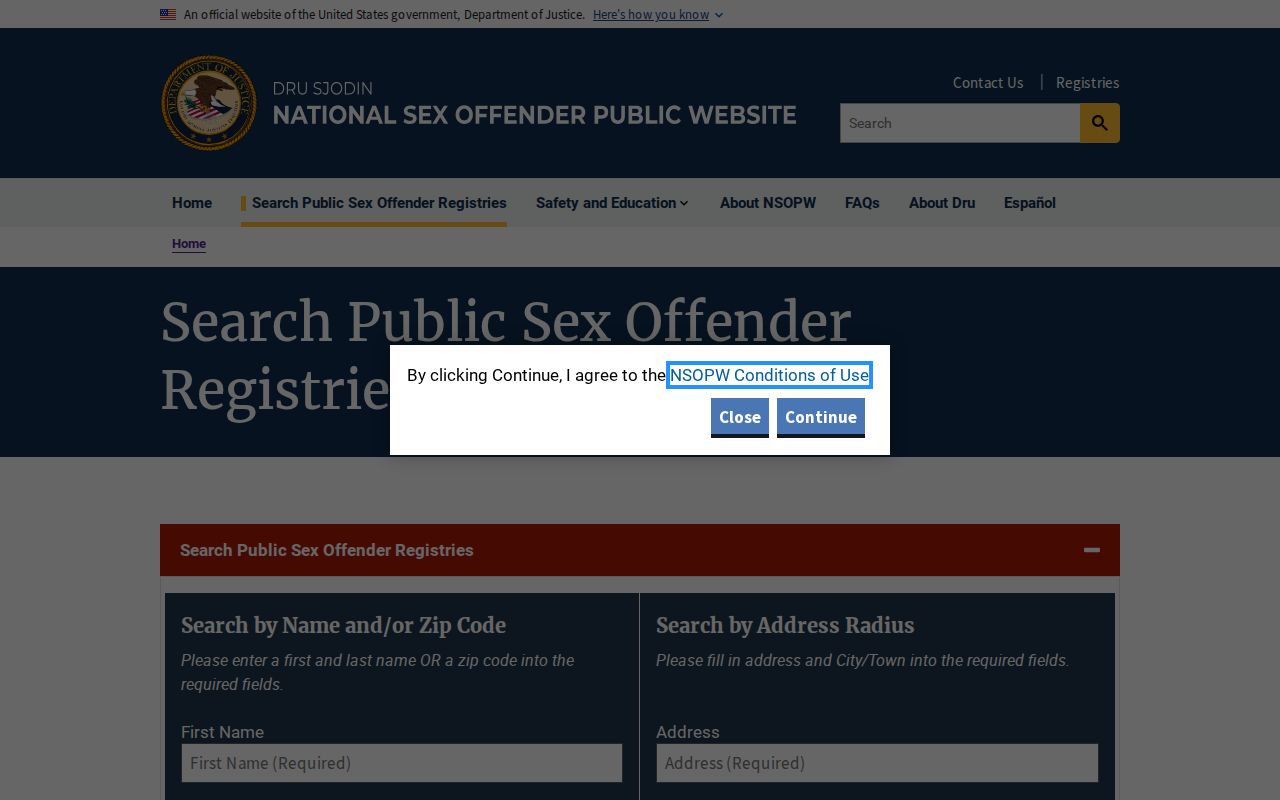
Use NSOPW as a second layer when the search crosses state lines, then return to ACIC for Arkansas profile details.
ACIC Registry Contact
ACIC lists a direct registry contact for additional information. The research identifies Sex Offender Registry Manager Paula Stitz, phone 501-682-2222, and ACIC at 322 S. Main Street, Ste. 615, Little Rock, AR 72201. That state contact is the best source for questions about registry display rules, level descriptions, and the state notification system.
For a Fulton County address registration question, contact the law enforcement agency with local jurisdiction. That may be the Fulton County Sheriff's Department for county addresses outside city police coverage, or a city police department for addresses within city jurisdiction.
When the question is about a court outcome rather than registration status, use Search ARCourts or the Fulton County court custodian. ACIC registry staff and court clerks maintain different records.
Lawful Use and Community Notification
The registry is for community notification and safety planning. It should be used to understand public registry information, verify a neighborhood or address concern, and identify the correct law enforcement contact. It is not a court docket, a sentencing file, or a tool for harassment.
Registry misuse warning: Do not use registry information to harass, threaten, intimidate, or unlawfully discriminate against a registrant or household. Arkansas registry information is governed by Ark. Code Ann. 12-12-901 through 12-12-920 and related public disclosure rules.
Note: When a registry profile and a court record appear to conflict, verify the registry status with ACIC and the case outcome with the court.